
AI Copilots for Insurance Agents in 2026: How Generative AI Is Rebuilding the Front Office
Generative AI copilots are quietly rewriting the front office of insurance. From quoting and underwriting prep to renewals, compliance and customer service, here is the complete 2026 guide to how AI copilots are reshaping insurance agents, brokers and call centers — and what to do about it.

Walk into any mid-sized insurance agency in 2026 and you will notice something strange: it is quieter than it used to be. The phones still ring, the renewals still pile up, the carriers still send their endless emails — but next to each agent, on a second screen or inside the same CRM tab, there is now a generative AI copilot doing the work that used to drain a junior team. It drafts the quote comparison. It summarizes the loss runs. It writes the renewal email. It flags the policy clause that does not match the underwriter's appetite. Two years after the first wave of GenAI hype, the technology has finally settled into the role it was always best suited for in insurance: not replacing humans, but sitting beside them. This is the complete 2026 guide to AI copilots for insurance agents — what they actually do, why adoption is suddenly accelerating, where the real productivity gains hide, and what carriers, brokers and MGAs need to get right to avoid the next wave of compliance and reputational risk.
What an AI copilot for insurance agents actually is
The term "AI copilot" gets thrown around loosely, but in an insurance context it has a fairly specific shape. A copilot is a generative AI assistant — usually built on a large language model — that lives inside the tools an agent already uses: the agency management system, the CRM, the carrier portal, Outlook, Microsoft Teams, sometimes a dedicated quoting platform. Instead of replacing those systems, it reads what is on the screen, listens to what the agent says, and helps the agent finish the task faster.
What separates a 2026 copilot from the chatbots of 2022 is context. Modern copilots are grounded in the carrier's product library, the broker's book of business, the client's prior policies and the regulator's filings. They use retrieval-augmented generation to pull the right facts, then write text that is calibrated to the agent's tone, the carrier's appetite and the regulator's rules. The output is not magic — but it is finished work, ready for a human to review, edit and send.
The three layers of a real copilot
- A grounding layer that connects to policy documents, rating manuals, loss runs, underwriting guidelines and CRM data — the source of truth.
- A reasoning layer powered by a frontier LLM (or a tuned mid-size model) that drafts quotes, summaries, emails and recommendations.
- A governance layer that logs every prompt, every retrieval and every output for audit, with guardrails for PII, bias and unauthorized advice.

Why 2026 is the breakout year for insurance copilots
The technology behind copilots has existed for several years, but three forces converged in 2025 and early 2026 to push them into mainstream insurance distribution. First, model cost collapsed. The same quality of output that cost a dollar per long document in 2023 now costs a few cents, which finally makes high-volume agent workflows economical. Second, regulators clarified the rules. The EU AI Act, the NAIC Model AI Bulletin and a wave of US state guidance have given carriers and brokers a clearer compliance playbook — they now know what disclosure, recordkeeping and human-oversight controls are expected.
Third, and most importantly, the talent gap finally bit. The US alone is short hundreds of thousands of insurance professionals as the older generation retires, and brokerages cannot hire fast enough to keep up with submissions, renewals and service requests. Copilots are no longer a productivity nice-to-have; they are a capacity strategy. Major studies from McKinsey and Deloitte have flagged front-office GenAI as one of the highest-ROI use cases in financial services, and insurance is now catching up to banking on adoption curves.
Signals that the trend is real
- Most top-20 global brokers have rolled out an internal GenAI copilot to at least part of their workforce.
- Carrier earnings calls in early 2026 routinely reference "GenAI productivity gains" as a margin driver.
- Independent agency networks are bundling copilots into their tech stacks as a recruiting tool.
- Vendors like Applied, Vertafore, Salesforce Financial Services Cloud and Microsoft are embedding native copilots into their core platforms.
Where AI copilots create the most value in 2026
Not every workflow benefits equally. The highest-value copilot use cases share three traits: they are text-heavy, repeated thousands of times a year, and tolerant of a human review step. That is exactly the shape of most agent and broker work.
1. Quoting and submission preparation
Commercial submissions are the classic insurance bottleneck. A copilot can read the ACORD application, the loss runs, the SOV and the prior policy, then generate a clean submission summary tailored to each target carrier's appetite. Brokers report that what used to take a junior account manager three hours often takes twenty minutes — and the quality is more consistent.
2. Renewal workflows
At renewal, copilots compare the expiring policy against the new quote, flag coverage gaps, draft the client-facing summary and pre-fill the renewal email. Loss-run analysis that used to be a spreadsheet exercise is now a one-click summary with severity, frequency and trend commentary.
3. Customer service and call center deflection
Inside the call center, copilots listen to the call in real time, surface the right policy clause, pre-fill the call disposition and draft the follow-up email. For self-service, regulated chatbots — grounded in the carrier's policy library — now handle a meaningful share of routine endorsements, billing questions and certificate requests.

4. Compliance and documentation
Copilots are surprisingly good at the unglamorous work of documentation: writing call notes, drafting suitability rationales, preparing producer training summaries and flagging missing disclosures. Because every output is logged, audit trails are actually stronger than the manual processes they replace — when carriers configure governance properly.
5. New business prospecting
On the growth side, copilots help producers research prospects, draft tailored outreach, and prepare meeting briefs that combine CRM history, industry news and prior loss experience. The win is not just speed — it is that smaller agencies can now produce the kind of polished, research-driven materials that used to be the preserve of national brokers.
How AI copilots are reshaping the insurance agent role
The fear, of course, is that copilots will replace agents and brokers. So far in 2026, the evidence points the other way. Agencies that adopted copilots early are not shrinking — they are taking on more accounts per producer, expanding into new lines, and shifting headcount from clerical work to advisory work. The job description is changing more than the headcount.
The new shape of the agent role
- Less time on data entry, more time on coverage strategy and client conversations.
- More accounts per producer, with copilots handling routine prep and follow-up.
- Higher expectations on advice quality — the copilot raises the floor, so humans have to raise the ceiling.
- A new "AI editor" skill set: reviewing, correcting and refining copilot output without rubber-stamping it.
Brokerages that frame copilots as a tool for producers rather than a replacement for them see far higher adoption — and far less internal resistance. The carriers and MGAs winning in 2026 treat their agents as augmented experts, not as a cost line.
Governance, compliance and the risks nobody can ignore
For all the upside, AI copilots in insurance carry real risks. The same model that writes a brilliant submission can also hallucinate a coverage detail, leak PII, or generate language that crosses into unlicensed advice. Regulators in the US, EU and UK have made clear that the carrier or producer remains responsible for the output — "the AI did it" is not a defense.
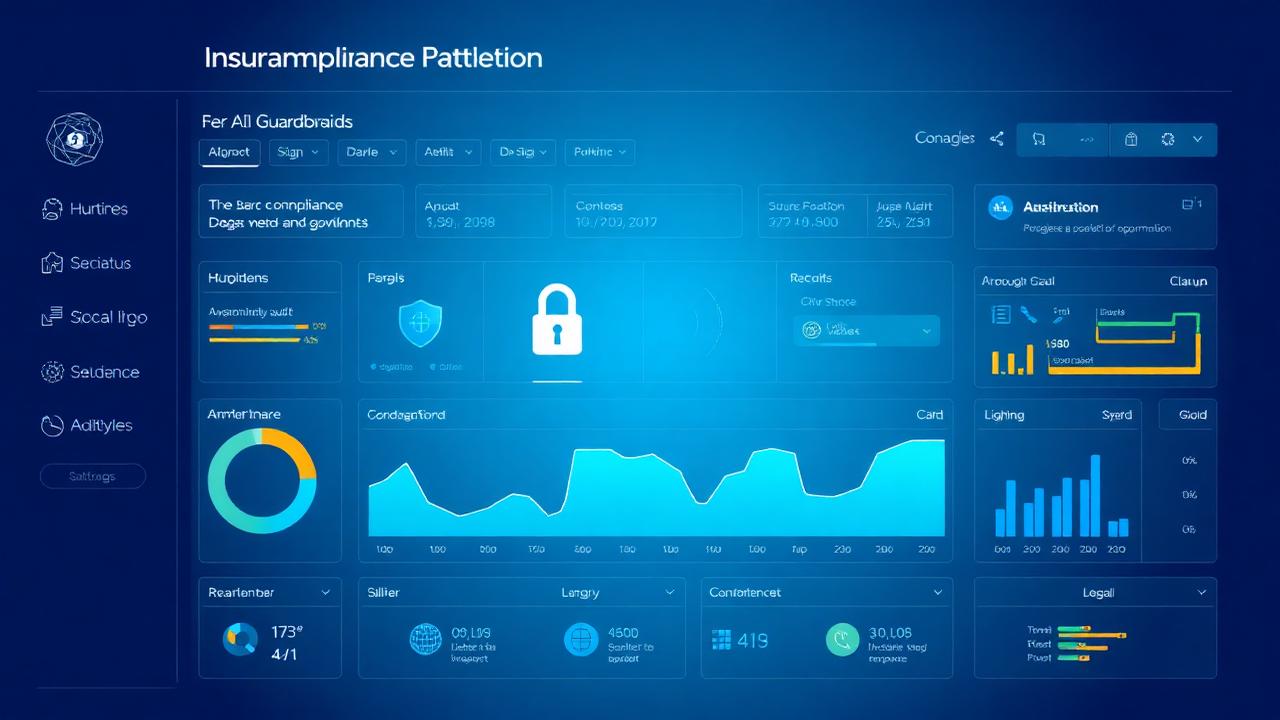
The non-negotiable guardrails for 2026
- Human-in-the-loop review for any client-facing output, with clear sign-off responsibility.
- Grounding on approved sources only — no open-web answers for coverage or pricing.
- PII redaction and data-residency controls aligned with state and EU rules.
- Full audit logging of prompts, retrievals and outputs, retained for the regulator's required period.
- Bias testing and model monitoring, especially for any copilot that influences underwriting or claims decisions.
- Clear disclosure to consumers when they are interacting with an AI system, as required by the EU AI Act and several US states.
Carriers that treat governance as a competitive advantage — not a compliance tax — are the ones moving fastest. Strong governance lets them roll copilots into more sensitive workflows, faster, with confidence.
How to roll out an AI copilot in an insurance organization
The biggest mistake in 2024 and 2025 was treating copilots like an IT project. The teams that are winning in 2026 treat them like a change-management program with a strong technology backbone.
A practical 90-day rollout playbook
- Days 1–15: Pick two high-volume, low-risk workflows (submission summaries and renewal emails are classic starting points).
- Days 16–30: Connect the copilot to grounded data sources — policy docs, rating manuals, CRM, loss runs.
- Days 31–60: Pilot with one team, measure baseline vs copilot productivity, capture every edit the humans make.
- Days 61–90: Tune prompts, add governance controls, expand to a second team, lock down audit logging and KPIs.
Metrics that actually matter
- Time per submission, quote or renewal — before vs after.
- Edit rate: what percentage of copilot output goes out unchanged?
- Hallucination rate, measured against a fixed test set of policy questions.
- Producer NPS — do agents actually like using it?
- Compliance incidents related to AI output, tracked separately from general E&O.
What comes after the copilot: agentic AI in the agency
The current generation of copilots is reactive — they answer when asked. The next wave, already in pilot at several large brokers and carriers, is agentic. These systems can break a goal ("prepare this renewal") into steps, call multiple tools, fetch loss runs from carrier portals, generate the comparison, draft the email and queue the whole package for human approval. Combined with the agentic claims models that are reshaping the back office, the front and back of insurance start to look like one continuous, AI-orchestrated workflow.
For agents and brokers, the strategic question is no longer whether to adopt copilots — it is how fast to move up the maturity curve before competitors do. The economics are clear, the regulatory path is workable, and the talent gap is not going away.
The bottom line for insurance leaders in 2026
AI copilots are not a hype cycle anymore. They are a quietly compounding productivity layer that is already changing how insurance gets sold, serviced and renewed. The carriers, brokers and MGAs that will look back on 2026 as a turning point are the ones treating copilots as core infrastructure — grounded in their data, wrapped in real governance, and deployed in service of the agents who still own the client relationship. Done well, this is not the end of the insurance agent. It is the beginning of a much more capable one.
Related reading on InsurAI Buzz
If you found this guide useful, you may also want to read our deep dive on parametric insurance and AI in 2026, our analysis of agentic AI in insurance claims, our guide to embedded insurance powered by AI, and our outlook on the future of insurance AI.
Sources and further reading
Key takeaways
- AI copilots are the breakout InsurTech productivity trend of 2026, sitting inside CRM, AMS and carrier portals.
- The highest-value use cases are submission prep, renewals, customer service, compliance documentation and prospecting.
- Copilots are augmenting agents, not replacing them — capacity per producer is the real KPI.
- Governance — grounding, audit logs, PII controls, disclosure — is the difference between scale and scandal.
- Agentic AI is the next step, turning copilots from reactive helpers into goal-driven workflow orchestrators.
Continue learning on InsurAI Buzz
- AI Voice Agents in Insurance 2026: How Conversational AI Is Rebuilding the Contact Center — Insurance Chatbots
- Small Language Models in Insurance 2026: Why Carriers Are Moving Beyond Frontier LLMs — AI Tools & Software
- Parametric Insurance and AI in 2026: How Instant Payouts Are Reshaping Climate and Catastrophe Coverage — Future of Insurance AI
Frequently asked questions
What is an AI copilot for insurance agents?
An AI copilot for insurance agents is a generative AI assistant embedded in the tools agents already use — CRM, agency management systems, carrier portals and email — that drafts quotes, summarizes loss runs, writes renewal communications and surfaces relevant policy information so producers can serve more clients with higher quality and consistency.
Will AI copilots replace insurance agents in 2026?
No. In 2026, AI copilots are augmenting rather than replacing insurance agents. They automate repetitive text and data tasks, but humans remain responsible for advice, coverage decisions and the client relationship. Agencies using copilots are typically growing capacity per producer rather than reducing headcount.
How do insurance copilots stay compliant with the EU AI Act and NAIC guidance?
Compliant insurance copilots ground outputs in approved sources, log every prompt and response for audit, redact PII, disclose AI use to consumers, and keep a human in the loop for any client-facing or decisioning workflow — directly aligned with the EU AI Act and the NAIC Model Bulletin on AI.
What workflows should an insurance broker automate first with an AI copilot?
The best starting points are submission preparation, renewal communications, loss-run summaries and call-center documentation. They are high-volume, text-heavy and tolerate a human review step, which makes them ideal for early copilot deployment with measurable ROI in 60–90 days.
Stay ahead of AI in insurance
Subscribe for weekly analysis trusted by underwriters, claims leaders and insurtech founders.
Subscribe freeRelated reading
AI Automation in Underwriting: From Weeks to Minutes
Submission triage, risk appetite matching and automated quoting are turning underwriting into a near-real-time function.