
Embedded Insurance & AI in 2026: The $700B Trend Quietly Eating the Industry
Embedded insurance is the breakout story of 2026 — and AI is the engine making it work. Here is the complete playbook on the $700B opportunity reshaping how policies are priced, sold, and serviced.

Embedded insurance — coverage offered seamlessly inside the products and journeys customers already use — is no longer a niche experiment. In 2026 it has crossed the line from buzzword to balance sheet, and it is on track to represent more than $700 billion in gross written premium globally by 2030 according to industry analysts. The accelerant is artificial intelligence: real-time underwriting, contextual offers, agentic claims, and dynamic pricing only work because modern AI can reason about risk in milliseconds. This guide breaks down what embedded insurance AI actually is, why it is exploding right now, the most profitable use cases, the technology stack carriers and brands need, the risks to manage, and the exact moves leadership teams should make this quarter.
What is embedded insurance — and why AI changes everything
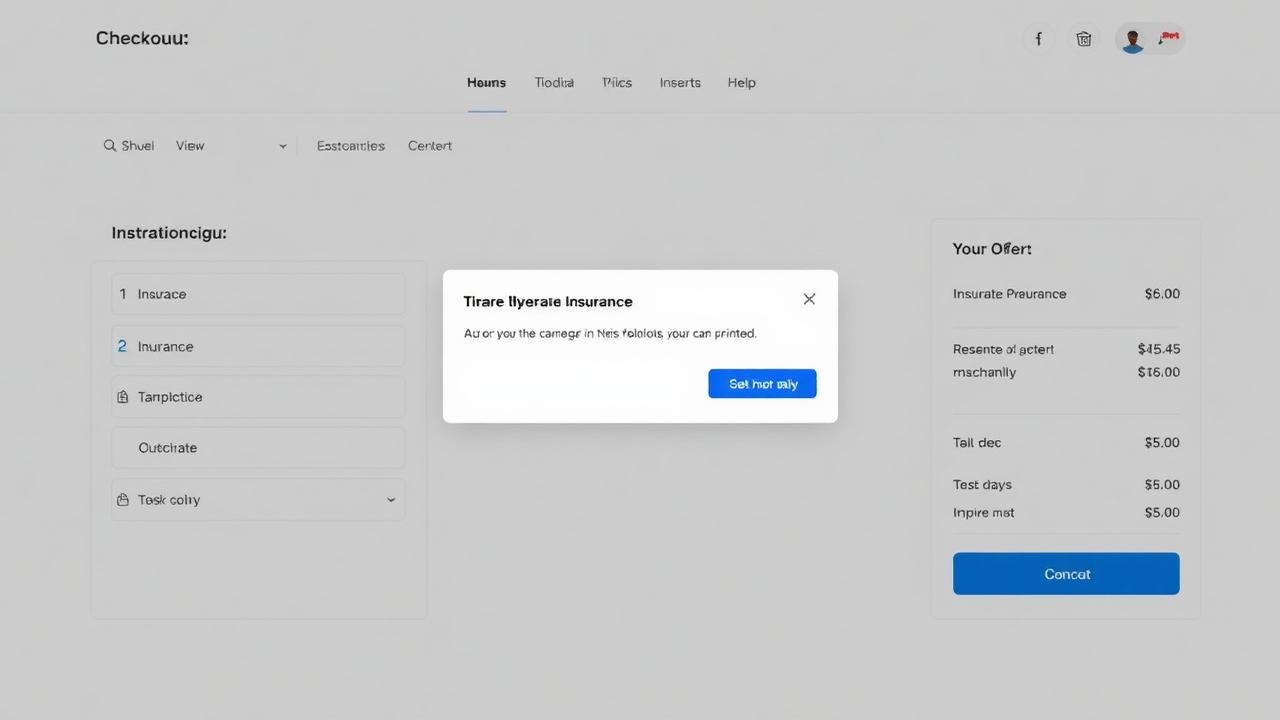
Embedded insurance is the practice of offering relevant insurance coverage at the exact moment of need, inside another product or platform — booking a flight, buying an iPhone, renting a car, hailing a ride, or checking out a Shopify cart. The buyer never visits an insurance website. Instead, a one-click toggle adds protection, the policy is bound instantly, and a digital wallet holds the proof of cover.
The pre-AI version of embedded insurance was largely static: fixed premiums, fixed limits, lots of friction. Modern embedded insurance is alive. Behind every offer, an AI model is reading dozens of contextual signals — device, location, basket value, weather, behavior history, even payment risk — and pricing the policy in real time. According to recent research from McKinsey and Swiss Re, embedded distribution can reduce customer acquisition costs by 70–90% versus traditional channels, and AI is the reason it scales without blowing up loss ratios.
Why embedded insurance AI is breaking out in 2026
Several forces converged this year to turn embedded insurance from a side bet into a board-level priority:
- Foundation models (GPT-class and Gemini-class) finally handle multi-step tool use reliably enough for real underwriting decisions.
- Open insurance APIs (think Lloyd's Blueprint Two, ACORD AL3, and major core platforms) make integration weeks, not years.
- Embedded finance has trained consumers to expect Buy-Now-Pay-Later-style flows — insurance is the natural next add-on.
- Regulators have published clearer guidance: the EU AI Act, NAIC Model Bulletin, and UK FCA Consumer Duty all map cleanly to embedded distribution.
- Brands (retailers, telcos, automakers, fintechs) are hungry for new high-margin revenue and customer-loyalty hooks.
Read our deeper breakdown of how this connects to broader 2026 carrier strategy in our guide to Agentic AI in Insurance and the AI claims processing playbook.
The seven highest-ROI embedded insurance AI use cases in 2026
1. Real-time travel insurance at point of booking
When a traveler books a flight, an AI model evaluates destination risk, weather, airline reliability, payment risk and historical claim patterns to price coverage for that exact trip. Conversion rates routinely hit 25–40%, vs. 5–10% for retargeted travel insurance ads.
2. E-commerce product protection
Shopify, Amazon and large DTC brands now embed accidental damage and theft cover at checkout. AI prices each policy based on the specific SKU, the buyer's address, and their order history. Attach rates above 30% are now typical for electronics and luxury categories.

3. Mobility & ride-share micro-insurance
Per-trip and per-mile policies are activated automatically when the rider or driver opens the app. Telematics + AI risk scoring price the trip in milliseconds. Uber, Bolt, Grab and Lyft-style platforms are reporting embedded insurance as one of their fastest-growing revenue lines.
4. Embedded SME insurance via fintech and BaaS
Stripe, Square, Brex and similar platforms now embed business insurance offers tailored to merchant transaction patterns. AI parses ledger data and instantly underwrites cyber, BI and liability cover that used to require a 12-page application.
5. Automotive — coverage that follows the car
OEMs like Tesla, BYD and Stellantis embed connected-car insurance at purchase, with AI continuously re-pricing based on driving behavior. Pay-how-you-drive is becoming the default model for EVs.

6. Health & wellness embedded in wearables
Apple Watch, Oura, Whoop and Garmin have become legitimate distribution rails. AI models translate biometric and activity data into dynamic life and health products with usage-based pricing.
7. Climate & parametric coverage embedded in agriculture and logistics
Parametric policies — payouts triggered by weather data, flight delays, or shipping events — are the perfect match for AI-driven embedded distribution. No claim form, no adjuster, just an automatic payout when the threshold is hit.
The embedded insurance AI tech stack
Building this is no longer a moonshot. The reference architecture has stabilized around four layers:
- Distribution layer — the partner app, website or device where the offer appears.
- Orchestration layer — a thin embedded-insurance platform (Cover Genius, Qover, bolttech, Hepstar, Sure, Walnut, etc.) that handles offers, binding, and policy admin via API.
- AI underwriting layer — real-time risk scoring, pricing optimization, fraud detection and personalization (often a mix of carrier-owned models and foundation models).
- Carrier and reinsurer layer — the regulated balance sheet and claims operation, increasingly running on agentic AI for service and settlement.

Economics: why CFOs love embedded insurance AI
Traditional insurance carries a customer acquisition cost of $300–$900 per policy in retail lines. Embedded distribution pushes that down to $5–$50, while AI underwriting keeps loss ratios in line. The result is a structurally better unit economic profile — even after paying generous commissions to the host platform. According to Swiss Re Institute, embedded P&C alone could contribute over $200B in premium by 2030, with AI as the non-negotiable enabler.
Risks every leader must manage
- Conduct & suitability risk — selling at point-of-need is powerful, but disclosure and informed consent must be airtight.
- Algorithmic bias — real-time pricing models must be tested against protected classes and documented under EU AI Act / NAIC bulletins.
- Data privacy — embedded means moving customer data across partners; GDPR, CCPA and the new US state privacy laws apply.
- Concentration risk — over-reliance on one platform partner can crush a portfolio overnight.
- Brand risk — a bad embedded claims experience now reflects on the host brand, not just the carrier.
What carriers, insurtechs and brands must do this quarter
- Pick one anchor partner and one embedded product — ship a production pilot in 90 days, not 18 months.
- Stand up an AI governance committee with documented model cards, bias testing, and human-in-the-loop checkpoints.
- Adopt a model-agnostic architecture so you are not locked into a single foundation model vendor.
- Wire AI claims and service from day one — embedded distribution without agentic claims is a leaky bucket.
- Track three KPIs religiously: attach rate, loss ratio, and partner NPS.
“By 2028, the question will not be whether your insurance product is embedded. It will be whether the AI behind it is good enough to win every single contextual auction.”
How to learn more
If you are building or buying in this space, start by mapping where your customers already make purchase decisions and where insurance would feel natural. Then evaluate orchestration partners on three things: API quality, AI underwriting capability, and regulatory coverage. Explore our deeper analyses on the future of insurance AI, AI claims processing and the best AI tools for insurance to round out your roadmap.
Key takeaways
- Embedded insurance powered by AI is the breakout 2026 trend — a $700B opportunity by 2030.
- The unit economics beat traditional distribution: 70–90% lower CAC at comparable loss ratios.
- Winners pick one anchor partner, ship a 90-day pilot, and wire agentic AI into claims from day one.
- Governance — bias testing, model cards, human-in-the-loop — is the moat, not the friction.
Continue learning on InsurAI Buzz
- AI Voice Agents in Insurance 2026: How Conversational AI Is Rebuilding the Contact Center — Insurance Chatbots
- Small Language Models in Insurance 2026: Why Carriers Are Moving Beyond Frontier LLMs — AI Tools & Software
- AI Copilots for Insurance Agents in 2026: How Generative AI Is Rebuilding the Front Office — AI Automation
Frequently asked questions
What is embedded insurance in simple terms?
Embedded insurance is coverage that is offered inside another product or service — like adding device protection at checkout or trip insurance during a flight booking — without the customer visiting a separate insurer.
How does AI power embedded insurance?
AI handles real-time risk scoring, dynamic pricing, fraud screening, personalization and agentic claims — the only way to underwrite millions of contextual offers profitably and instantly.
How big is the embedded insurance market in 2026?
Industry analysts project embedded insurance gross written premium will exceed $700B globally by 2030, with double-digit annual growth starting in 2026.
Which industries benefit most from embedded insurance AI?
Travel, e-commerce, mobility/ride-share, fintech/SME, automotive, health/wearables, and climate-exposed sectors like agriculture and logistics see the highest attach rates and ROI.
Is embedded insurance regulated?
Yes. It must comply with conduct rules (FCA Consumer Duty, EU IDD), AI governance (EU AI Act, NAIC Model Bulletin) and data privacy laws (GDPR, CCPA). A robust governance program is non-negotiable.
Stay ahead of AI in insurance
Subscribe for weekly analysis trusted by underwriters, claims leaders and insurtech founders.
Subscribe freeRelated reading

Parametric Insurance and AI in 2026: How Instant Payouts Are Reshaping Climate and Catastrophe Coverage
Parametric insurance is exploding in 2026, and AI is the reason. From satellite-fed flood triggers to instant crop and travel payouts, here is the complete guide to how AI-powered parametric insurance is reshaping climate, catastrophe and embedded coverage.

AI Cyber Insurance in 2026: How Carriers Are Pricing the Ransomware Era
AI is rewriting the cyber insurance playbook in 2026 — from real-time risk scoring and machine-speed underwriting to agentic ransomware response. Here is the complete guide carriers, brokers and risk managers actually need.

Agentic AI in Insurance: How Autonomous Agents Are Rewriting Underwriting, Claims & Service in 2026
Agentic AI has moved from buzzword to balance sheet. Here is how autonomous AI agents are reshaping insurance in 2026 — and what carriers must do this quarter to keep up.